00 / THE THROUGH-LINE✳
Creative problem-solving
Define unfamiliar challenges, test unconventional approaches, and connect ideas that don't ordinarily share the same drawing board. This is the point of the work—not merely a stage of it.
Creative problem-solving across acoustics, electronics, software, and user interfaces. When the answer doesn't come off a shelf, we explore what could work—and how to make it real.
Our work starts where a technical challenge meets a human need. A musical instrument may need to feel easier to play. A software experience may need to feel as intuitive as playing music. A rooms sound may need to modify the emotions of the people inside. The useful answer often lives between disciplines.
Understand the actual constraint before deciding what to build.
Borrow useful thinking from engineering, design, sound, and code.
Move from sketches and models to a testable experience or prototype.
From the physical behavior of sound to the software people touch, we look for the right combination of disciplines—not a one-size-fits-all deliverable.
Define unfamiliar challenges, test unconventional approaches, and connect ideas that don't ordinarily share the same drawing board. This is the point of the work—not merely a stage of it.
Explore sound generation, propagation, measurement, room behavior, and the relationship between instruments and the people who use them.
Consider signal paths, circuits, controls, microcontrollers, and hardware/software integration for purpose-built devices.
Develop software concepts, browser-based tools, interactive features, and the logic that makes a useful digital experience work.
Shape navigation, information architecture, on-screen controls, and feedback around what a person is actually trying to do.
Work through housings, mechanical interfaces, accessories, custom fixtures, and iterative builds to explore whether an idea works in practice.
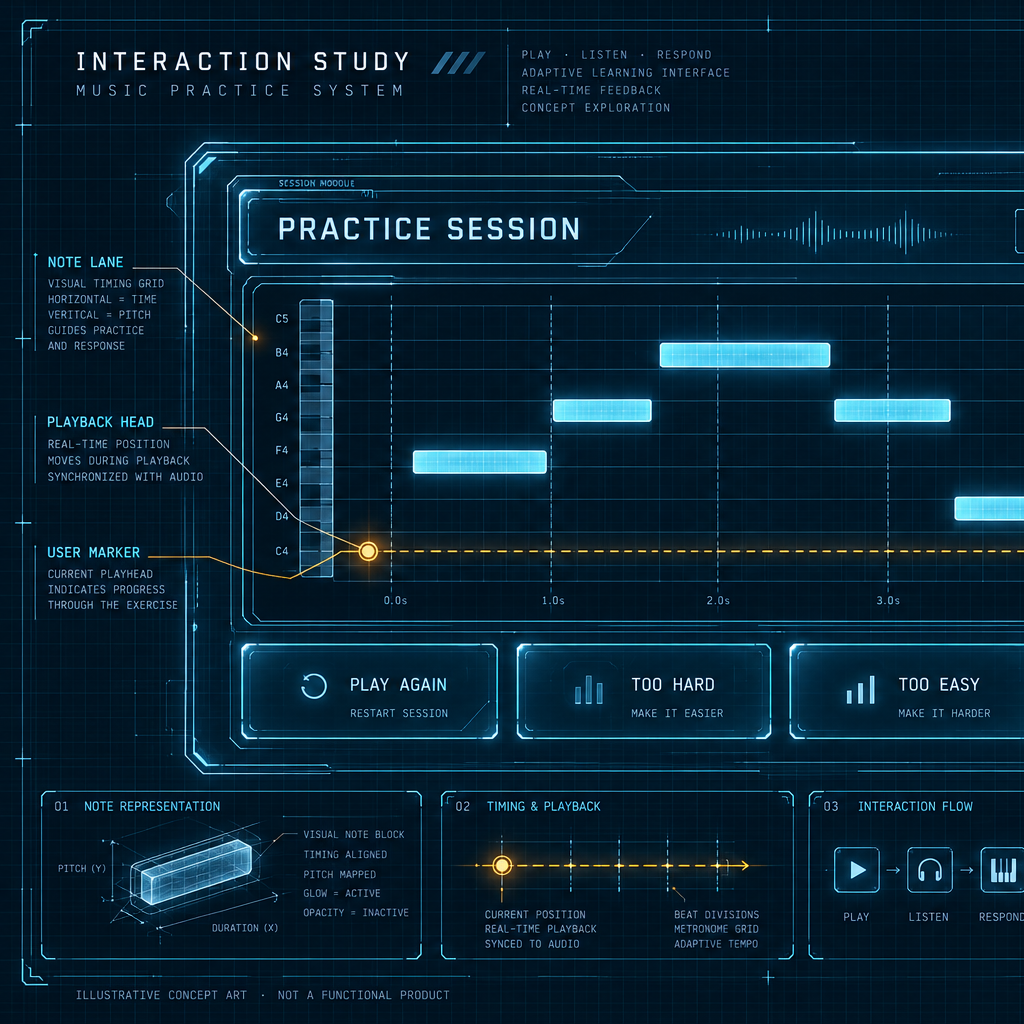
Diagrams, signal paths, interface layouts, and mechanical sketches give abstract problems something to work with. The illustrations below express our areas of interest; they are conceptual, not records of completed products.
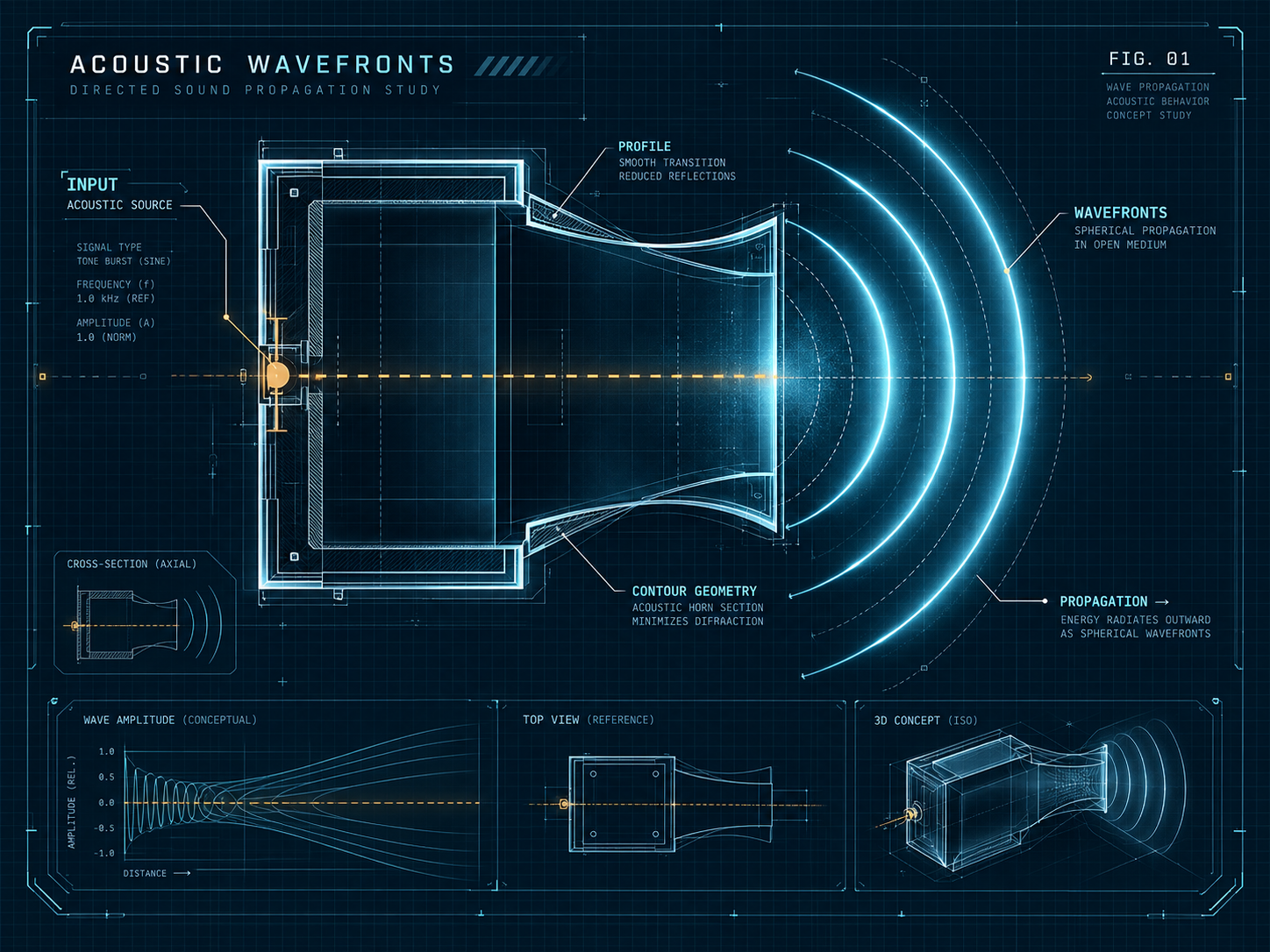
Think about how sound moves through a device, instrument, or room—and what changes its behavior.
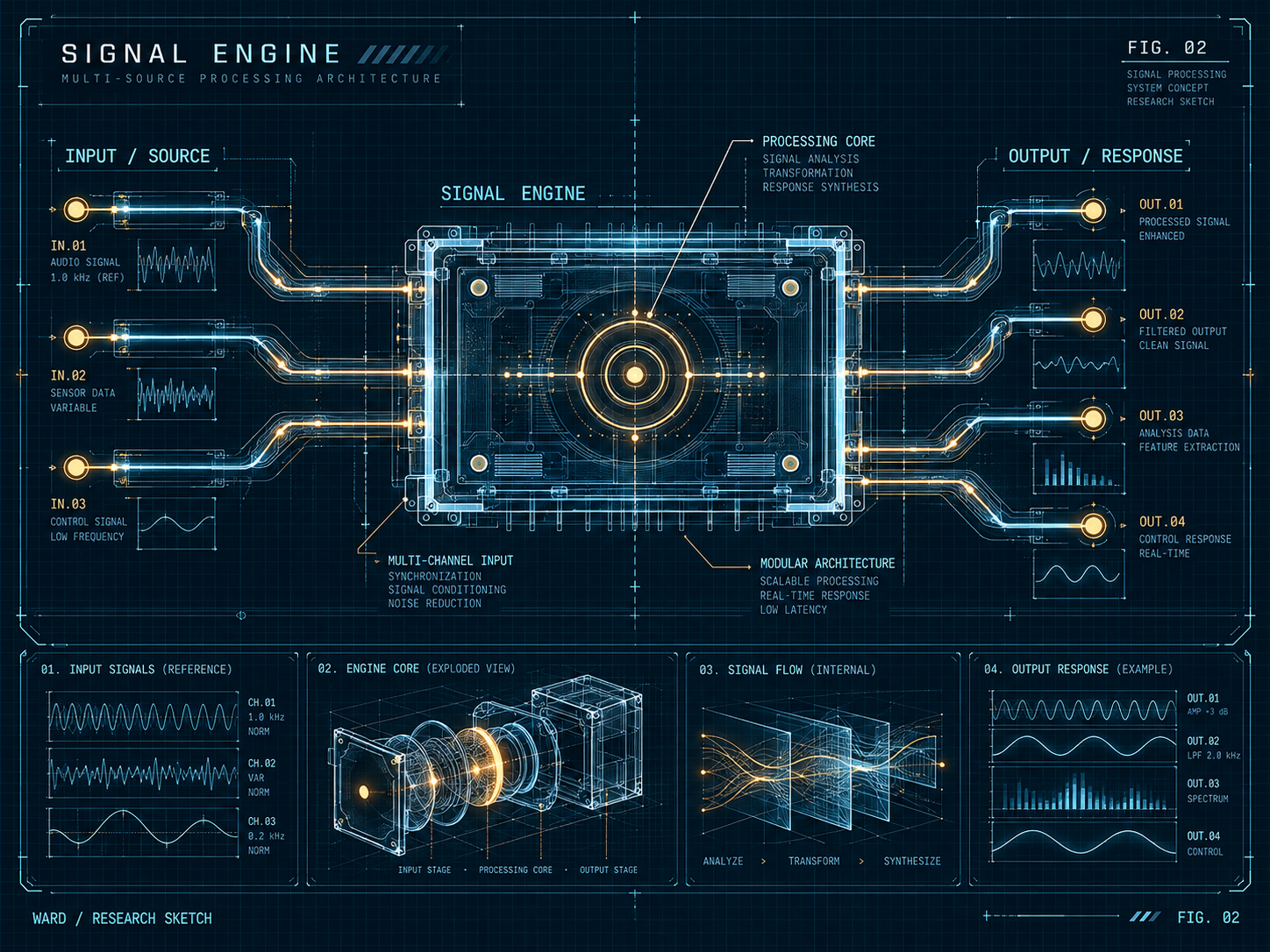
Bring together circuits, firmware, mechanics, and real-world use before committing to a solution.
Organize a technical system into decisions, interactions, and feedback a person can understand.
The path can change with the project. The goal is to learn what matters early, make ideas testable, and keep refining rather than merely adding complexity.
Describe the real problem, desired experience, and non-negotiable constraints.
Consider different ways forward—including the less obvious options.
Build just enough to challenge assumptions and reveal what works.
Listen, measure, observe, improve, and simplify whenever possible.
One example of how a technical idea becomes a usable tool. Enter the dimensions of a rectangular room to estimate its standing-wave frequencies. This is an illustration—not a substitute for on-site acoustic measurements.
| Axial frequencies | 1st | 2nd | 3rd |
|---|
A modal-frequency visualization, not a predicted measured frequency response.
A sketch, a workflow that feels wrong, a device that doesn't exist yet, or a strange acoustical problem—start with what you're trying to change, and why it matters.
Use this to prepare your inquiry.
Add your preferred WAARD contact details in Mobirise before publishing. This form prepares text locally; it does not submit or store an inquiry.